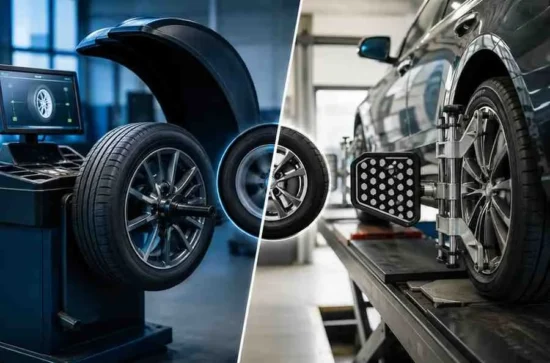
Most drivers use these two terms like they mean the same thing. They don't. Wheel Balancing vs Wheel Alignment covers two completely different problems with two completely different fixes. Getting them mixed up costs you money, ruins your tyres, and puts you at risk on the road.
This guide breaks both down clearly. No jargon, no fluff. Just what you need to know to make the right call.
What Is Wheel Balancing?
Wheel Balancing fixes uneven weight distribution across your tyre and wheel assembly.
Every tyre has small weight differences. Even a brand-new tyre is not perfectly even all the way around. When you spin a wheel at 60 mph, those tiny differences create wobble. That wobble turns into Steering Wheel Vibration you can feel in your hands or feet.
A wheel balance service uses a machine to spin each wheel and find heavy spots. Small weights are then clipped to the rim to even things out.
Signs You Need Wheel Balancing
- Steering Wheel Vibration at certain speeds, usually 50–70 mph
- Vibration felt through the seat or floor
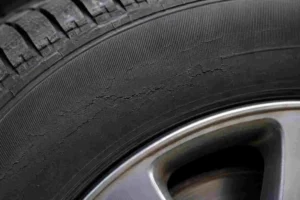
- Uneven Tire Wear appearing in patches or scalloped patterns
- Tyres wearing faster than expected
Tire balance should be checked every 5,000–6,000 miles or whenever you feel that steering wobble.
What Is Wheel Alignment?
Wheel Alignment corrects the angles at which your tyres meet the road.
Three main angles are adjusted: camber, toe, and caster. When these are off, your car pulls to one side. Your steering wheel sits crooked even when driving straight. And your tyres wear down on one edge far faster than the other.
Alignment goes off over time through normal driving. Hitting a pothole, clipping a kerb, or even slow wear on suspension parts all knock angles out of spec.
Signs You Need Wheel Alignment
- Car drifts left or right on a straight road
- Steering Wheel sits off-centre when driving straight
- Uneven Tire Wear on inside or outside tyre edges
- Squealing tyres on bends
- Your car feels loose or wanders
Wheel Alignment vs Balancing: The Core Difference
Infographic showing the core differences between wheel balancing and wheel alignment, including symptoms, maintenance schedules, tools, and vehicle performance impacts. Here is where most guides get vague. Let's be direct.
| Feature |
Wheel Balancing |
Wheel Alignment |
| Fixes |
Weight imbalance in wheel |
Angle of wheels to road |
| Symptoms |
Vibration, uneven tread |
Pulling, crooked steering |
| Tools used |
Balancing machine |
Alignment rack |
| How often |
Every 5,000–6,000 miles |
Every 12 months or after impact |
| Affects |
Tyre wear, ride comfort |
Steering, handling, tyre edges |
When drivers compare wheel alignment vs balancing, the simplest rule is this: vibration usually means balance. Pulling or drifting usually means alignment.
But both cause Uneven Tire Wear, so never ignore either.
How Tire Rotation Fits In
Tire rotation is not the same as balancing or alignment. But it works alongside both.
Rotating tyres means moving them between positions, front to back, side to side. Front tyres carry more weight and wear faster. Rotation evens out wear and tear across all four tyres.
Do it every 5,000–7,500 miles. Pair it with a balance check for the best results.
Why All Three Work Together
- Alignment makes sure angles are right
- Balancing removes vibration from weight differences
- Tire rotation spreads wear evenly
Skipping any one of them means the others do less for you.
What Happens If You Ignore Wheel Balancing or Alignment?
This is where the real cost sits.
Ignored wheel balance
- Tyres wear out months earlier
- Vibration damages wheel bearings over time
- Fuel economy drops
- Ride becomes genuinely uncomfortable
Ignored alignment
- Tire wear eats through inner or outer edges fast
- Steering response gets sloppy
- Braking distances can increase
- Your car works against you instead of with you
Neither issue fixes itself. Both get worse the longer you wait.
How Often Should You Get Each Done?
Wheel Balancing
- Every 5,000–6,000 miles
- When you buy new tyres
- After a puncture repair
- When you feel vibration
Wheel Alignment
- Every 12 months minimum
- After hitting a pothole or kerb
- If you notice pulling or drift
- When fitting new tyres or suspension parts
If you're unsure, book a check. Most issues are caught early and fixed quickly when tyres are inspected regularly.
How to Know Which One You Actually Need
Use this quick check:
- Feel vibration in the wheel or seat? Start with Wheel Balancing.
- Car pulling to one side or steering wheel off-centre? Book a Wheel Alignment.
- Both happening at once? Get both checked. It's common. A pothole can throw off balance and alignment in one hit.
- Noticing uneven tread across your tyres? Check alignment first. Then balance. Then consider a tire rotation to even things out.
Mobile Tyre Fitting in Egham: Balancing and Alignment on Your Schedule
If you're in Egham or the surrounding areas, you don't need to drive to a garage and wait. The Tyres Egham brings the service to you.
Our mobile tyre fitting Egham service covers new tyre fitting, wheel balancing, and tyre rotation at your home, workplace, or roadside. We carry professional balancing equipment on every van so your tyres are fitted and balanced on the spot.
For full Wheel Alignment, we use a dedicated alignment rack at our local workshop. Booking is straightforward and turnaround is fast.
Whether you need a quick balance check or a full wheel alignment vs wheel balancing assessment, The Tyres Egham makes it easy to stay on top of your vehicle's health.
Conclusion
Wheel Balancing vs Wheel Alignment are two different jobs that both protect your tyres and your safety. Balancing fixes vibration from uneven weight. Alignment fixes pull and drift from bad angles. Both contribute to Uneven Tire Wear when neglected. Pair them with regular tire rotation and you'll get far more life from every set of tyres.
Don't wait for something to feel seriously wrong. Contact us today and stay ahead of the problem.
FAQs
Does alignment affect wheel balance?
No. They are separate services. But both affect tire wear, so both matter.
Can I drive with bad alignment?
Yes, but your tyres wear down fast. Handling suffers. It's a false economy to delay.
Will balancing fix a vibration at all speeds?
Probably not. Balance usually causes vibration at specific speed ranges. Vibration at all speeds could point to a suspension or tyre issue.
How long does each service take?
Balancing: 15–30 minutes per tyre. Alignment: 30–60 minutes for a full four-wheel check.