
Small Cracks in Tyre Sidewall: Safe or Dangerous, Complete Guideline
- By Tyrese Gham
- June 17, 2026
- 12:08 pm
You spot something unusual on your tyre. It looks like thin lines running across the rubber. Those are Small Cracks in Tyre Sidewall, and they are more common than most drivers think. The real question is whether they are safe to ignore or a sign you need to act fast.
Not all cracks are the same. Some are surface-level and minor. Others go deeper and can put your safety at serious risk. Knowing the difference could prevent a Blowout Risk on a busy road.
Quick Answer: Are Small Cracks in Tyre Sidewall Dangerous?
In some cases, small surface cracks are only cosmetic. However, deeper cracks can weaken the tyre structure and increase the chance of failure.
If cracks are spreading, exposing internal cords, or appearing alongside bulges, the tyre should be inspected immediately. Driving on damaged tyres can increase the risk of sudden air loss and accidents.
Extra Reading: How Long Do Budget Tyres Last
What Causes Tyre Sidewall Cracking?
Understanding the root cause helps you prevent the problem before it gets worse. Several factors lead to tyre sidewall cracking, and most of them are avoidable.
UV Exposure and Heat Damage
UV Exposure is one of the biggest causes of cracked rubber. Sunlight breaks down the compounds that keep rubber flexible. Over time, tyres lose their natural oils, and the rubber dries out. This leads to visible cracking on the sidewall surface.
Parking in direct sunlight regularly speeds up this process. If you live in a hot climate or park outdoors most of the time, your tyres will age faster than expected.
Incorrect Tyre Pressure
Incorrect Tyre Pressure puts uneven stress on the sidewall. Over-inflated tyres stretch the rubber too thin. Under-inflated tyres cause the sidewall to flex more than it should. Both conditions speed up wear and contribute to cracking.
Check your tyre pressure at least once a month. The correct pressure is usually found on a sticker inside the driver's door or in your vehicle handbook.
Ageing Tyres and Dry Rot
Ageing Tyres naturally develop cracks over time. Most manufacturers recommend replacing tyres after five to seven years, even if the tread looks fine. As rubber ages, it loses elasticity and becomes brittle. This is often called Dry Rot Tyres, a condition where the rubber dries out from the inside.
Dry Rot Tyres can look fine on the surface but be seriously degraded underneath. If your tyres are over six years old, get them inspected even if they have good tread depth.
Chemical Exposure
Oils, cleaning products, and road chemicals can all degrade rubber. Avoid spraying tyre shine products that contain petroleum-based chemicals. These may make tyres look good short-term but actually speed up cracking.
Low Mileage and Infrequent Use
This surprises many drivers. Cars that sit unused for long periods develop tyre sidewall cracking faster. Tyres need regular movement to distribute protective oils within the rubber. Vehicles left stationary develop flat spots and cracks more quickly.
How to Spot Small Cracks in Tyre Sidewall
Inspecting your tyres regularly is simple and takes less than five minutes. Here is what to look for:
- Hairline cracks: Thin surface-level lines on the sidewall. Often cosmetic at first but worth monitoring.
- Deep cracks: Cracks you can see clearly without bending down. These are a concern.
- Cracking around the bead: Where the tyre meets the rim. This area is under high stress and any cracking here is serious.
- Cracks across the tread: If cracking moves into the tread grooves, Tyre Replacement is almost certain.
Walk around your vehicle once a week and give each tyre a quick visual check. Catching the problem early saves money.
Are Small Cracks in Tyre Sidewall Dangerous?
The honest answer is: it depends on the severity. Tyre Sidewall Damage ranges from cosmetic surface lines to structural failures waiting to happen.
Minor Cracks
Small, shallow cracks with no visible depth are often surface-level. They can remain stable for months if the tyre is otherwise in good condition. However, they should not be ignored. Monitor them regularly.
Moderate Cracks
If cracks are visible, run along the sidewall, or appear in multiple places, the tyre is weakening. At this point, get a professional inspection. A tyre technician can assess whether the structural integrity is still intact.
Severe Cracks
Deep cracks, cracks near the bead, or any cracking that exposes the cord underneath are dangerous. This level of Tyre Sidewall Damage means the tyre could fail without warning. The Blowout Risk becomes very real. Do not drive on a tyre in this condition.
Will Cracked Tyres Fail an MOT?
This is one of the most common questions drivers ask. The answer depends on the severity of the cracking.
Cracked Tyres will fail an MOT if the damage is considered a safety risk. MOT testers look for:
- Cuts or cracks that expose the ply or cord structure
- Bulges or lumps on the sidewall
- Damage that affects the structural integrity of the tyre
Surface-level cracking alone may not automatically fail an MOT. But if a tester judges the damage as a risk, your vehicle will not pass. If your tyres show any significant cracking, get them checked before your MOT test. It saves you from an unexpected fail and the cost of an emergency replacement.
When Should You Replace Cracked Tyres?
Tyre Replacement is necessary when:
- Cracks are deep enough to see the rubber below the surface layer
- The tyre is over six years old regardless of tread depth
- Cracks appear near the bead or tread area
- The tyre has a bulge alongside the cracking
- A professional inspection identifies structural weakness
Do not try to repair a cracked sidewall. Unlike punctures in the tread area, sidewall damage cannot be safely patched. If the sidewall is compromised, the only safe option is a new tyre.
How Does Tyre Cracking Compare to Other Tyre Issues?
Understanding tyre sidewall cracking in context helps you make better decisions about maintenance and budget.
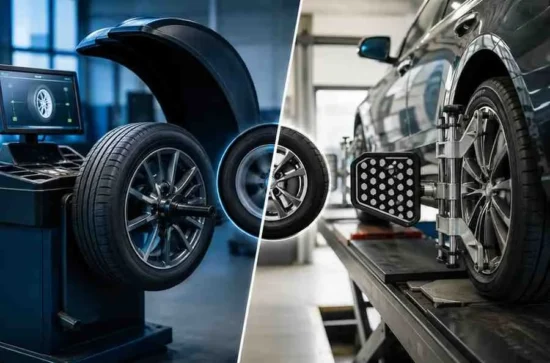
Wheel balancing vs wheel alignment are two separate services often confused by drivers. Wheel balancing corrects uneven weight distribution around the tyre. Wheel alignment corrects the angle of your wheels. Both affect how tyres wear. Poor alignment causes uneven tread wear, which can stress the sidewall and worsen cracking over time. If your vehicle pulls to one side, get alignment checked.
If you are unsure about Car Service charges for tyre inspections or replacements, ask for a quote upfront. At The Tyres Egham, we are transparent about pricing so there are no surprises.
How to Slow Down Tyre Cracking
Prevention is always better than replacement. Here are practical steps to protect your tyres:
- Maintain correct tyre pressure: Check monthly and before long journeys
- Park in the shade: Reduce UV Exposure wherever possible
- Avoid harsh chemicals: Use tyre-safe cleaning products only
- Drive regularly: Keep tyres moving to distribute protective compounds
- Rotate tyres: Even wear extends the life of all four tyres
- Inspect regularly: Catch small cut in tyre sidewall damage before it gets worse
When to Call for Help
If you notice Small Cracks in Tyre Sidewall while on the road or away from home, do not risk driving on a seriously damaged tyre. Roadside assistance Egham is available for drivers in the Surrey area who need urgent help. It is always better to call for support than to continue driving on a tyre that may fail.
Why Choose The Tyres Egham?
At The Tyres Egham, we have helped hundreds of local drivers stay safe on the road. Our team inspects tyres thoroughly, gives honest advice, and only recommends Tyre Replacement when it is genuinely needed. We stock a wide range of tyres across all budgets and can fit them quickly while you wait.
Whether you need a routine check, advice on Cracked Tyres, or an urgent replacement, we are here to help. Our team understands why are my car tyres cracking and will walk you through the options clearly.
Conclusion
Small Cracks in Tyre Sidewall should never be ignored. Some are minor and worth monitoring. Others are a serious safety risk that requires immediate action. The key is knowing which is which. Regular inspections, correct tyre pressure, and choosing quality tyres all help prevent tyre sidewall cracking before it becomes a danger. If you are unsure about the condition of your tyres, Contact us today. Your safety on the road starts with four healthy tyres.
FAQs
Can I drive with small cracks in my tyre sidewall?
Small surface cracks may not be dangerous immediately, but they should never be ignored. If the cracks become deeper, spread across the sidewall, or expose internal cords, the tyre could fail unexpectedly. Have the tyre inspected by a professional if you notice any signs of worsening damage.
What causes small cracks in tyre sidewalls?
The most common causes include UV Exposure, Ageing Tyres, Incorrect Tyre Pressure, long periods of inactivity, and exposure to harsh chemicals. Over time, these factors dry out the rubber and cause it to lose flexibility, leading to visible cracking.
Do cracked tyres always need to be replaced?
Not always. Minor surface cracks can sometimes be monitored if the tyre is otherwise in good condition. However, Tyre Replacement is recommended when cracks are deep, spreading, located near the bead, or affecting the structural integrity of the tyre.
Will tyre sidewall cracking fail an MOT?
A tyre may fail an MOT if the cracking exposes the tyre cords, causes structural weakness, or is accompanied by bulges or severe Tyre Sidewall Damage. Light surface cracking alone may not result in a failure, but a professional inspection before your MOT is recommended.
How can I prevent tyre sidewall cracking?
You can reduce the risk of tyre sidewall cracking by maintaining the correct tyre pressure, parking away from direct sunlight, driving regularly, avoiding harsh tyre cleaning chemicals, and having your tyres inspected routinely. Proper maintenance helps extend tyre life and improve road safety.
About the Author

Tyre Egham Expert
Tyrese Gham is a author of thetyresegham, where he shares insightful, well-researched, and reader-focused content.
Latest Articles
How to Change a Flat Tyre: Step-by-Step Guide 2026
How Long Do Budget Tyres Last | Ultimate Guide 2026